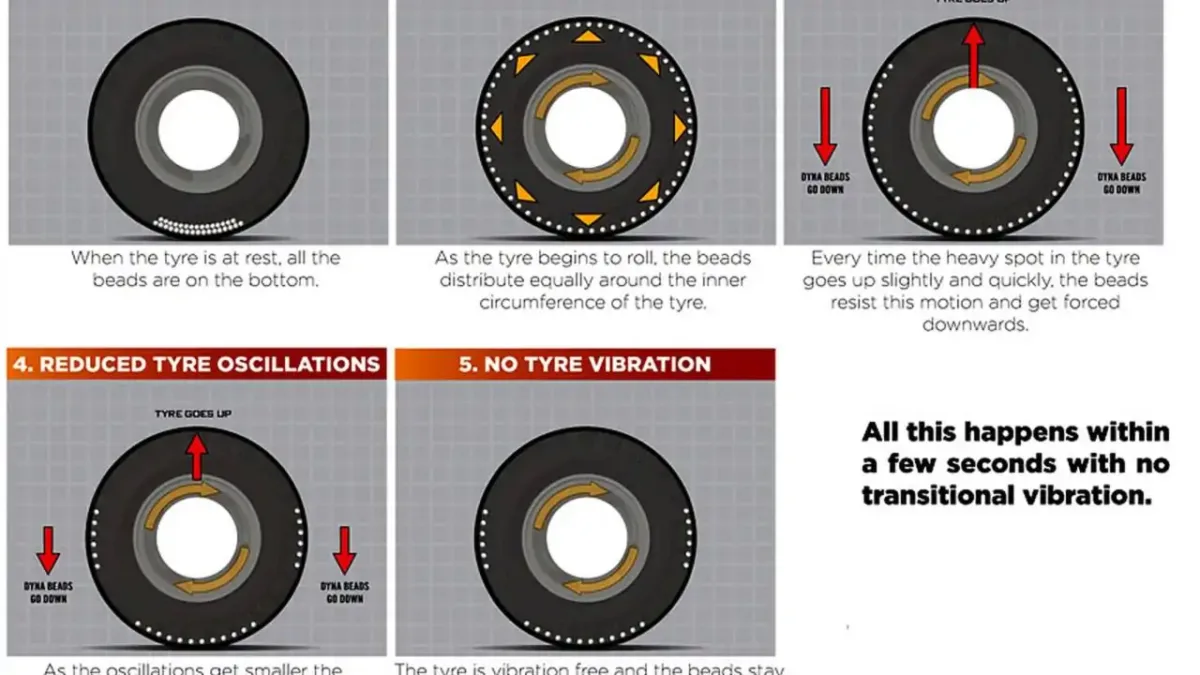
Balance beads are small, typically hollow spheres made from materials such as plastic or ceramics, designed to provide a dynamic balancing solution for vehicle tires. They are marketed as an alternative to traditional tire weights and are often touted for their ability to eliminate vibrations, enhance ride quality, and extend tire life. The primary function of balance beads is based on their ability to redistribute weight within the tire as the vehicle moves, supposedly ensuring a more consistent contact with the road.
Manufacturers of balance beads assert that when inserted into the tire, these beads will automatically position themselves according to the centrifugal forces experienced during tire rotation. This movement supposedly equalizes any imbalances in the tire, which helps to reduce vibrations and improve handling. Claims surrounding the effectiveness of balance beads suggest that they can not only stabilize the tire but also eliminate the need for periodic rebalancing, as the beads can adjust in real-time to any alterations in weight distribution caused by wear or road conditions.
Despite these endorsements, the automotive community remains skeptical of such technology. Critics argue that while balance beads may offer some benefits, these claims are often exaggerated. Various tests have shown that traditional methods of tire balancing, such as the use of lead weights or other fixed instruments, consistently yield better results in terms of vibration reduction and overall performance. Furthermore, the actual effectiveness of balance beads can depend on factors such as tire type, vehicle speed, and driving conditions.
In essence, while balance beads are marketed as a modern solution for tire balancing, the actual benefits they provide in real-world scenarios merit further investigation and research.
Common Issues Faced with Balance Beads
Balance beads are often marketed as an innovative solution for tire balancing, yet many users report a variety of significant issues arising from their use. One prevalent problem is unwanted vibrations that occur during operation. These vibrations can emanate from an imbalance that the beads fail to correct effectively. When driven at certain speeds, drivers frequently notice a persistent shaking that detracts from the vehicle’s overall performance and can even compromise safety.
Uneven tire wear is another critical concern associated with the usage of balance beads. Drivers have observed that tires equipped with these beads can wear out more quickly on one side compared to the other. This premature wear not only results in increased replacement costs but also affects the vehicle’s handling characteristics, leading to compromised ride quality. When the tires do not maintain a consistent contact patch with the road, steering precision decreases and can result in steering pull.
Overall, while balance beads may seem like a convenient option for tire balance, the numerous issues reported by drivers raise serious questions about their effectiveness. From vibrations and uneven tire wear to performance challenges in adverse weather, these problems present real challenges that cannot be overlooked for those seeking unhindered driving experiences.
Comparative Analysis: Balance Beads vs. Traditional Balancing Methods
When considering methods for tire balancing, two main approaches arise: balance beads and traditional methods, such as wheel weights. Understanding the differences between these two options is pivotal to making an informed choice for maintaining vehicle performance and safety.
Balance beads are small, free-floating ceramic or glass particles that are inserted into the tire during mounting. These beads shift within the tire as it rotates, theoretically allowing them to settle at the bottom, where they counterbalance any weight imbalances. Proponents of balance beads often highlight advantages such as the elimination of lead weights, reduced vibration over time, and the convenience of installation. However, these benefits come with significant drawbacks.
Conversely, traditional balancing methods, primarily involving the use of wheel weights, have long been the industry standard. These weights are directly affixed to the rim of the wheel, providing a more reliable counterbalance. The key advantage of wheel weights lies in their consistency; they do not shift or settle like balance beads, ensuring ongoing stability while driving. Traditional methods have been proven effective over decades of automotive use, with comprehensive data supporting their performance under various driving conditions.
Conclusion and Recommendations for Tire Balancing
The effectiveness of balance beads for on-road tire balancing, it is evident that their use may be more myth than merit. Balance beads, despite their popularity, do not consistently deliver the expected results in enhancing tire stability and wear. Instead, traditional methods such as dynamic balancing remain superior for achieving a smooth, vibration-free ride. I had written about this several years ago using the Interco TrXus tires on a road trip to Tennessee, I also reviewed them for RideApart when I wrote for them. I wish I had reread my article before I tried these again. They were terrible then, and they are terrible now. The 3-4 hours this is going to take to disassemble the wheels, remove the beads, reassemble and balance them properly was not worth the intended convenience. Comment if you have used balance beads with any success, to me they are a waste of time.